
PVC membrane for the toughest flat roofs.
Heat-welded, chemical-resistant, and comfortable with standing water — the premium single-ply option.
When PVC is worth the upgrade.
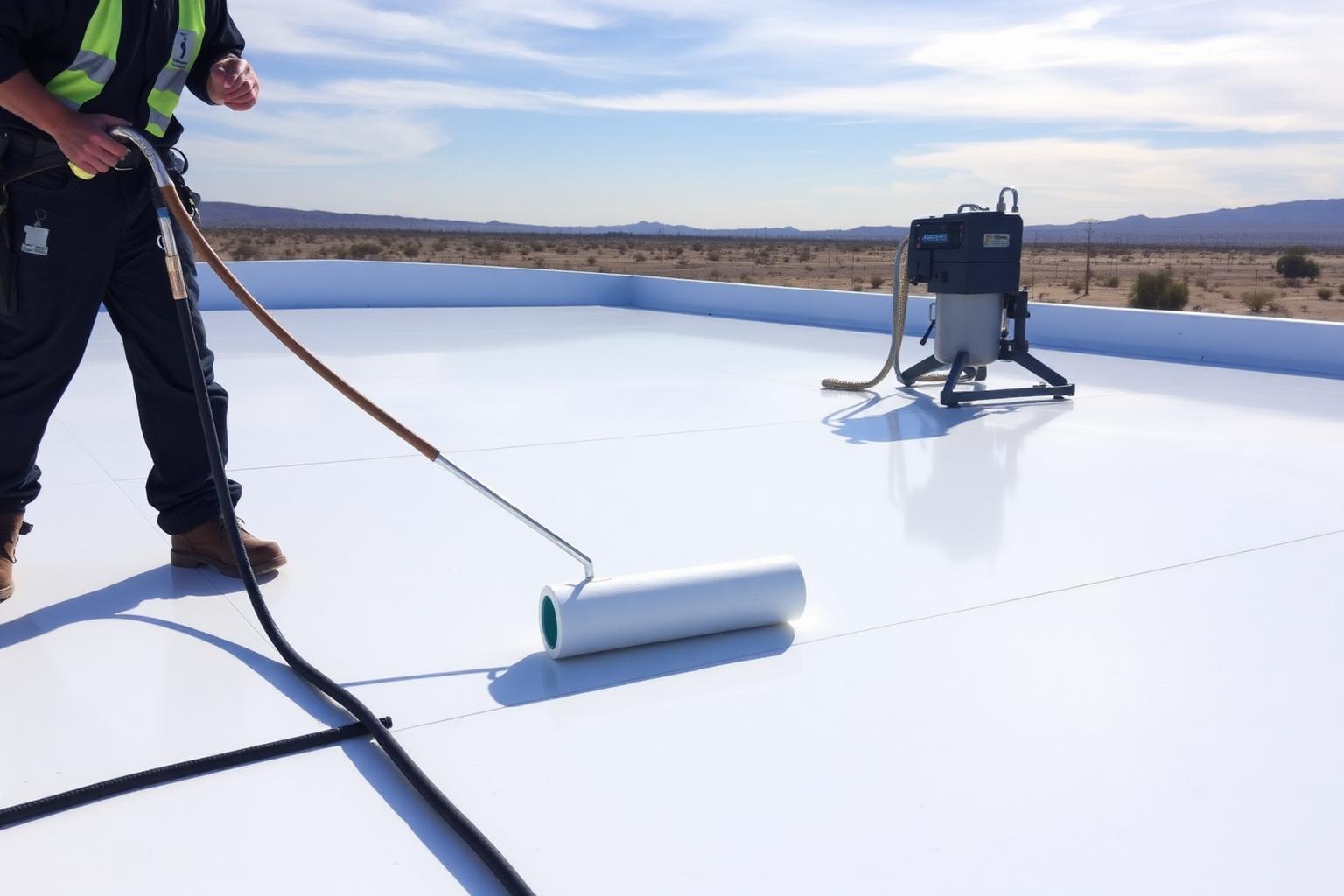
PVC and TPO look similar on a roof, but PVC's chemistry gives it real advantages in specific conditions: it tolerates standing water without degrading, resists animal fats and chemical exhaust (which is why it dominates restaurant roofs), and is inherently fire-resistant. If your flat roof ponds after every monsoon storm, has kitchen exhaust nearby, or carries heavy rooftop equipment traffic, PVC is usually the membrane we recommend. The welded seams are as strong as the sheet itself, so the roof behaves like one continuous piece of material. As with any single-ply, the value comes from the details underneath — dry substrate, tapered insulation to move water toward drains, and properly rebuilt flashing. We don't roll new membrane over wet insulation.
- Hot-air welded PVC single-ply membrane
- Excellent ponding-water resistance
- Grease and chemical resistance for restaurants
- Fire-resistant and highly reflective
- Tapered insulation and drainage correction
- Full flashing rebuild at curbs and penetrations
Common questions
Is PVC better than TPO?
For ponding water, grease exposure, and chemical resistance — yes. For a straightforward residential or light-commercial flat roof, TPO usually delivers the same result for less money.
How long does a PVC roof last?
Typically 20–30 years in our climate, and PVC can be cleaned and recoated near end of life to extend service.
Can you install PVC over an existing roof?
With a cover board and a dry, sound substrate, yes. We test for trapped moisture first — covering a wet roof guarantees a short-lived one.