
TPO membrane for flat and low-slope roofs.
Heat-welded single-ply that reflects sun, sheds monsoon rain, and ends the annual patch cycle on an old built-up roof.
Why TPO works well in northern Arizona.
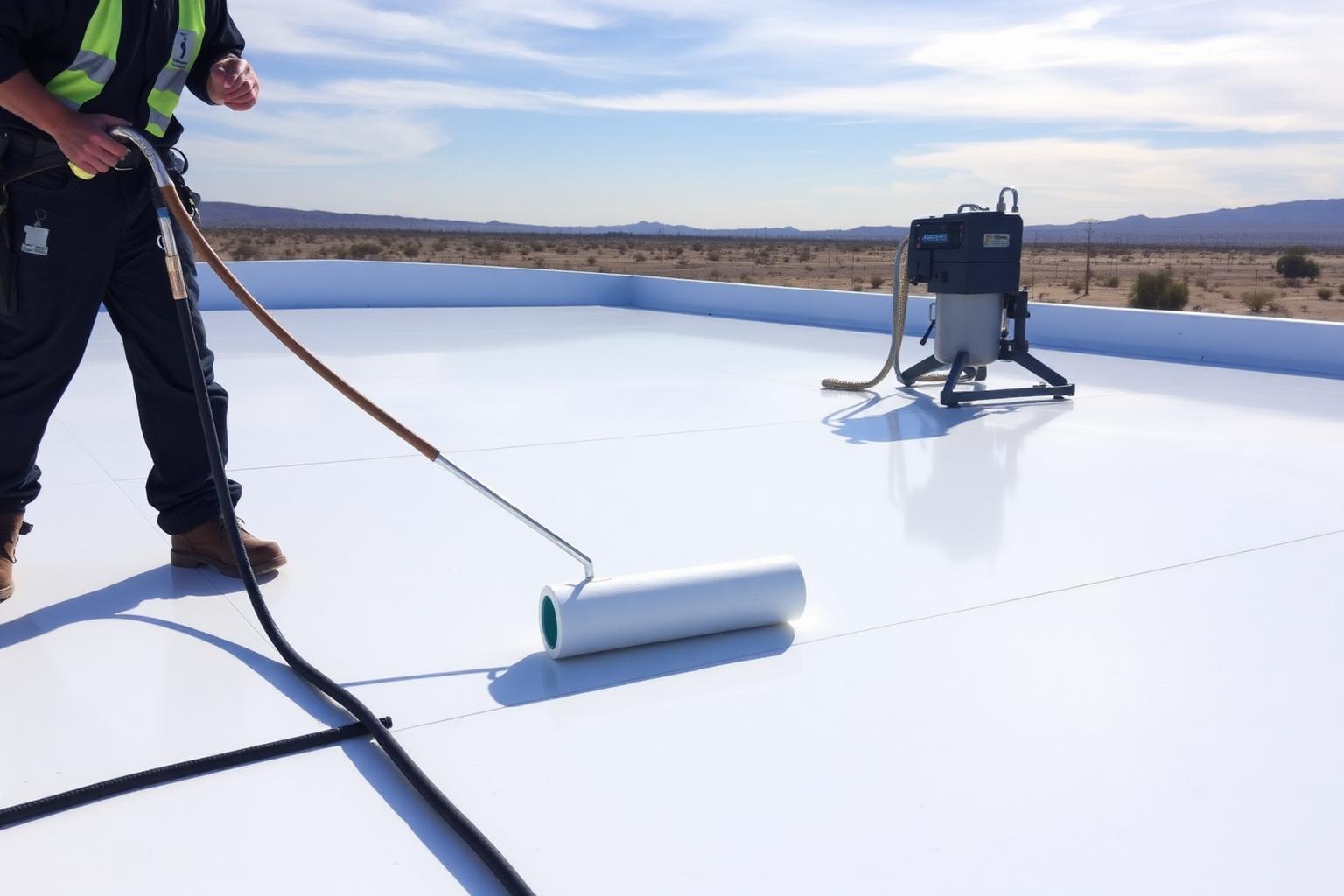
TPO is a white, highly reflective thermoplastic membrane whose seams are hot-air welded into a continuous sheet — no adhesives to dry out, no laps to lift. On a Prescott flat roof, that means fewer failure points during monsoon downpours and a surface that stays dramatically cooler than black modified bitumen. A proper installation starts below the membrane: we tear off or overlay per condition, correct decking, add tapered insulation where water ponds, and rebuild the flashing at parapets, curbs, drains, and penetrations. Most flat-roof leaks happen at those details, not in the middle of the field. TPO is a strong choice when you want a new roof system rather than a coating over an old one. If your existing membrane is sound, ask us about a silicone coating instead — it's often the smarter spend.
- Mechanically attached and fully adhered TPO
- Hot-air welded seams
- Tapered insulation for positive drainage
- New parapet, curb, and drain flashing
- Highly reflective white membrane
- Residential and light-commercial flat roofs
Common questions
How long does a TPO roof last?
A quality 60–80 mil TPO installed correctly typically lasts 20–25 years in our climate, and can be recoated at the end of that run to extend it further.
TPO or PVC — which should I choose?
TPO costs less and performs well on most residential and light-commercial roofs. PVC handles grease, chemical exposure, and constant ponding better, which matters for restaurants and some commercial buildings.
Can TPO go over my existing flat roof?
Sometimes, with a cover board and if the substrate is dry and sound. If moisture is trapped in the old roof, it has to come off — we probe and check before we quote.